

Flatbed trucks are widely used for transporting heavy and oversized loads, but unloading them can be challenging without the right equipment. A rolling mobile platform makes this process not only easier, but significantly safer for workers.
Understanding Flatbed Trucks and Trailers
A flatbed trailer is designed with an open platform and no side walls, making it ideal for carrying large or irregularly shaped cargo that wouldn’t fit in enclosed trucks.
These trailers are commonly used for:
- heavy machinery
- construction materials
- oversized equipment
- bulk cargo
Typically built from heavy-duty steel and supported by multiple axles, flatbed trailers can handle demanding transport jobs. Standard sizes range from 48 to 65 feet in length and 8.5 to 9.5 feet in width.
Their open design offers flexibility, but it also introduces safety challenges.
Common Risks with Flatbed Truck Operations
Without proper handling and equipment, flatbed trucks can pose serious risks:
- Cargo may fall during unloading, putting workers and nearby at risk
- The weight and distribution of loads can increase the chance of tipping
- Improper unloading can damage goods, leading to financial loss
- Workers climbing on trailers face a high risk of falls because of lack of support
These risks are often not due to complexity, but rather lack of proper safety measures.
Why Rolling Platforms Make a Difference
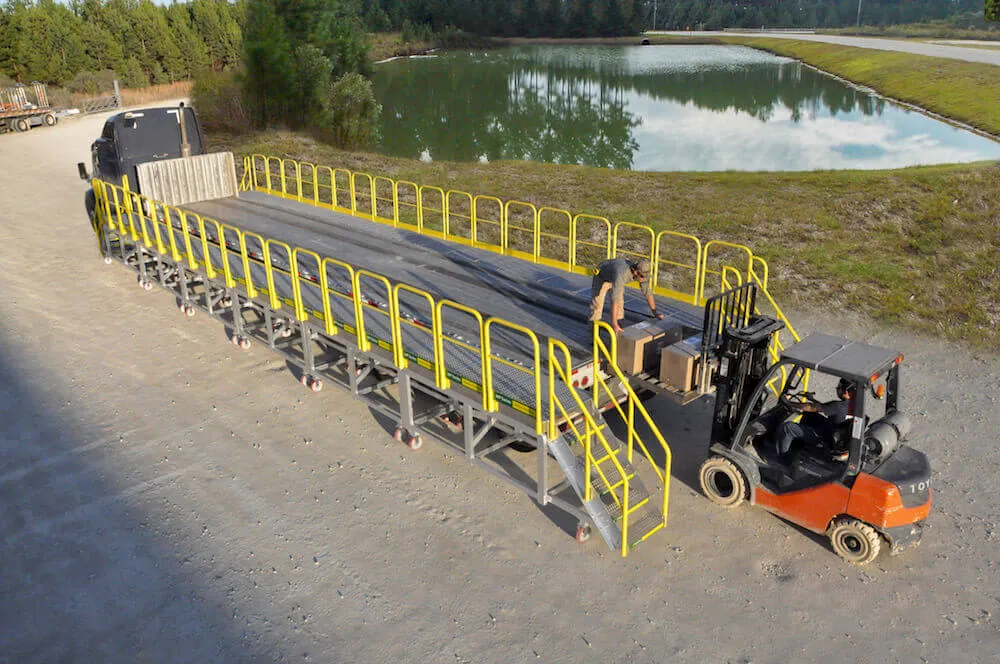
Because flatbed trailers have no sides, workers often have to climb up and down while handling heavy items. This is where a rolling platform becomes essential.
A properly fitted rolling platform:
- provides stable access to the trailer
- reduces the risk of slips and falls
- allows safer handling of heavy or bulky cargo
Workers need effortless access to the items on the trailer, which is where metal stairs come in. Rolling platforms come with metal stairs to provide a safe, easy way for workers to get on and off the trailer. They also help prevent trips and falls, which can be especially dangerous if workers carry heavy or bulky items.
The Role of Guardrails and Access Systems
Guardrails are not just an add-on, they’re critical.
When workers are stacking, securing, or covering loads, railings provide the support needed to prevent falls. This is especially important when dealing with uneven or shifting cargo.
In situations where enclosed trailers aren’t available, adding a rolling platform with guardrails is a practical way to improve safety without changing the entire transport setup.
Flexible Design for Real Work Environments
Modern rolling platforms are built with flexibility in mind.
Features often include:
- removable handrails
- modular stair components
- customizable height and width
This allows businesses to adjust the platform based on their specific needs, whether it’s for loading flatbeds or accessing elevated work areas.
Instead of relying on temporary solutions like ladders, planks, or makeshift scaffolding, a rolling platform provides a stable and reliable alternative.
Beyond Flatbed Trucks
Rolling work platforms are not limited to transport operations.
They are also widely used in:
- warehouse environments
- aircraft maintenance
- industrial facilities
- storage tank and boiler access
In these settings, workers often need safe access to elevated areas for inspection, maintenance, or operation tasks. A mobile platform offers both safety and mobility.
Improving Safety and Productivity
A rolling work platform does more than prevent accidents, it improves efficiency.
With easier access to cargo:
- loading and unloading becomes faster
- workers experience less fatigue
- overall workflow becomes smoother
Most platforms are made from steel or aluminum and include caster wheels for easy movement. Many can also be customized with additional safety features.
Aside from loading/unloading cargo in manufacturing, our mobile work platforms also work best in helicopter maintenance and aircraft manufacturing. When large storage tanks and boilers heat up and access heights above normal reach, mobile work units come in handy when workers need to turn valves and open up the top hatch for a refill.
Final Thoughts
If your operation involves flatbed trucks, relying on basic access methods is a risk you don’t need to take.
A rolling platform provides:
- safer access
- better stability
- improved productivity
It’s a practical investment that protects both your workers and your operations.